
Colorado Retirement Towns: Factors To Consider When Choosing A Community

Choosing a place to retire in Colorado involves assessing a set of community characteristics and practical realities. The concept covers how housing types, cost of living, healthcare accessibility, local amenities, transportation, climate and seasonal weather, tax considerations, and social offerings interact to shape daily life for older adults. For many people the aim is to locate a community where routine needs, leisure preferences, and long-term supports align with personal priorities; this concept frames which towns may be more appropriate based on measurable and experiential factors rather than promotional language.
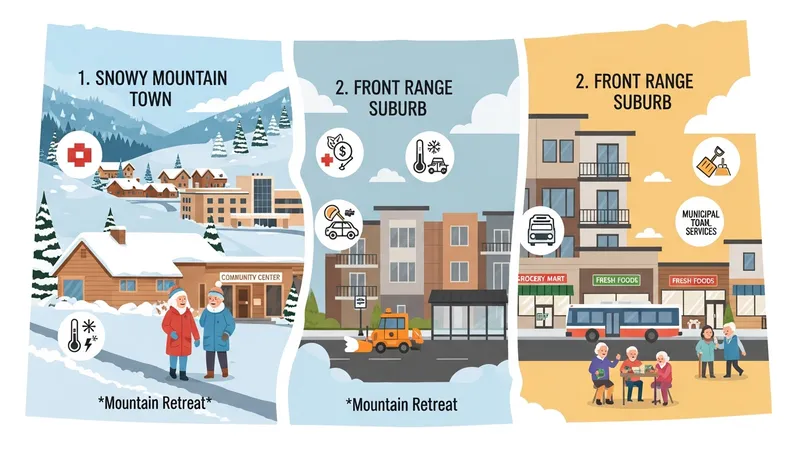
Evaluating Colorado towns for retirement typically requires comparing concrete aspects such as proximity to hospitals, availability of accessible housing, municipal services (snow removal, senior programs), and local cultural or outdoor resources. Geographic differences within the state — mountain elevations, Front Range suburbs, and southwestern high-desert areas — can influence heating costs, driving conditions, and seasonal access. Financial considerations such as property tax patterns, homeowners insurance in wildfire- or flood-prone zones, and utility costs often factor into the overall suitability assessment for retirees.
- Fort Collins — A college-adjacent community with mixed housing stock, municipal services, and regional medical centers; housing types include single-family homes and condominiums typical of a mid-sized city setting.
- Colorado Springs — A larger city on the Front Range with varied neighborhoods, multiple hospitals, and established public transit options; may offer more urban services than smaller mountain towns.
- Durango — A southwestern mountain town with recreational access and smaller population; housing and seasonal service availability can differ from Front Range communities.
When comparing towns like those listed, it may help to group factors into categories: essential services (healthcare, grocery, pharmacy), mobility (road maintenance, public transit availability), and social infrastructure (senior centers, volunteer organizations). These categories offer a framework to weigh trade-offs: for example, a town with strong recreational offerings may have fewer specialized medical services nearby, whereas a larger city may provide broader healthcare access but with higher housing costs. Using such categories can clarify which local attributes align with individual preferences and functional needs.
Housing options often determine immediate affordability and long-term maintenance expectations. In Colorado, dwellings range from single-level ranch houses and condominiums to multi-story mountain cabins. Maintenance requirements, potential for snow-related access issues, and insurance considerations (e.g., wildfire risk in some zones) may influence total living costs. Many retirees also consider proximity to family, public services, and volunteer or community program availability as part of housing decisions rather than relying solely on purchase price.
Access to healthcare is typically a critical factor for older adults. Larger Colorado cities generally have hospitals with broader specialty coverage, while smaller towns may rely on regional clinics and transfer agreements to larger centers. Travel time to emergency care can be a significant practical consideration, as can the presence of home-health agencies and outpatient services. Publicly available sources such as local hospital and clinic directories may offer specific information about service levels in each town.
Local amenities and transportation patterns can affect daily life and social engagement. Towns with regular public transit, well-maintained sidewalks, and accessible community centers may support greater autonomy for residents who prefer not to drive frequently. Conversely, remote or high-elevation towns may require more personal vehicle use, which can be impacted by winter weather. Evaluating the frequency and reliability of local services may provide insight into how easily daily routines can be maintained.
In summary, the concept of evaluating Colorado retirement towns centers on matching community characteristics to personal priorities through categories such as housing, healthcare access, amenities, transportation, and climate. Comparing these factors on a town-by-town basis may reveal trade-offs that are important for long-term planning. The next sections examine practical components and considerations in more detail.