
Kitchen Grease Removers: Choosing Heavy Duty Formulas For Commercial And Home Use

Removing persistent kitchen grease often requires stronger cleaning formulations and specific techniques tailored to the environment where the grease accumulates. In commercial kitchens, grease may build up rapidly on hoods, fryers, and exhaust ducts, while in home kitchens it typically forms on stovetops, backsplashes, and range hoods. Heavy-duty cleaning formulas are designed to break down oil and carbonaceous residues through chemical action, emulsification, or enzymatic breakdown. The selection of a particular formulation typically depends on the substrate being cleaned, the thickness and composition of the grease, and practical considerations such as ventilation and available equipment.
Formulations intended for intensive degreasing can vary widely in pH, solvent content, and surfactant type, and these properties influence how they perform on different materials. Users may encounter high-alkaline products, solvent-based solvents, citrus-derived solvents, or biologically active cleaners; each category can act differently on organic soils and residues. Application methods and dilution instructions often differ between commercial and domestic products, and safe handling measures such as personal protective equipment and proper rinsing are commonly advised. Understanding these distinctions helps inform choices that match cleaning needs without making absolute claims about performance.
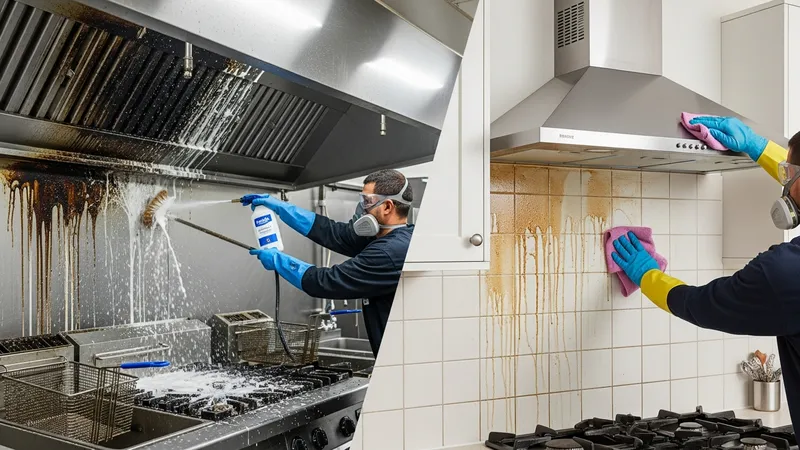
- Alkaline degreasers: High-pH cleaners that promote saponification of fatty soils; often used on heavy buildup and metal surfaces.
- Solvent-based degreasers: Hydrocarbon or glycol ether solvents that dissolve oils and polymerized grease; typically effective for thick, tacky residues.
- Enzymatic or biologically active cleaners: Formulations that use enzymes to break down organic components over time; often used where lower corrosivity or environmental profile is preferred.
Alkaline degreasers typically contain strong builders or caustic agents that may neutralize fats and convert them into soluble forms; they can be effective for baking-on and carbonized deposits but can also affect certain finishes and painted surfaces. Solvent-based products often remove polymerized oils more rapidly by solvating them, which can reduce manual scrubbing but may require good ventilation and careful disposal. Enzymatic cleaners may work more slowly and can be used where repeated, low-impact cleaning is acceptable; they may be less aggressive toward metal finishes and coatings. Each type may include surfactants or chelating agents to assist emulsification and rinsing.
Concentration and dilution are practical considerations: commercial facilities commonly use concentrated stock solutions with adjustable dilution controls, while household products are often sold at ready-to-use concentrations or with user-friendly dilution guidance. Stronger concentrations may shorten dwell time but can increase risks to surfaces and to user safety if not handled properly. Material compatibility testing on an inconspicuous area may often be recommended before treating whole surfaces, and following manufacturer instructions for dilution and contact time typically reduces the chance of unintended damage.
Safety and environmental aspects often influence the choice of heavy-duty formulas. High-pH and solvent-containing cleaners can require gloves, eye protection, and adequate ventilation; neutralizing or rinsing steps may be needed to prevent residues that could affect food-contact surfaces. Some formulations are designed to meet more stringent environmental or workplace standards and may reduce volatile organic compound (VOC) emissions or use readily biodegradable components. Wastewater management and disposal should typically follow local regulations to avoid contaminant release.
Operational context and cleaning schedules often determine which formulas and methods are practical. Commercial kitchens may integrate mechanical cleaning, scheduled degreasing of hoods and filters, and professional deep-clean services as part of routine maintenance, while residential users often balance ease of use and storage considerations. Training for staff or household members on safe handling and correct application may reduce incidence of improper use. The next sections examine practical components and considerations in more detail.