
No Win No Fee Child Support Attorneys: Understanding Costs, Risks, And Legal Protections

Fee structures commonly used in outcome-dependent child support representation
Outcome-dependent fee structures in child support matters typically fall into identifiable categories introduced earlier: contingency percentages tied to recovered funds, conditional uplift fees attached to successful outcomes, and hybrids combining reduced hourly charges with a success component. The way each structure allocates risk differs: contingency arrangements transfer much financial risk to the lawyer until recovery occurs, while hybrid models share risk between client and counsel. Many lawyers specify that contingency percentages apply only to recovered arrears and not to future support streams, or they may limit percentage application to amounts actually collected after third-party costs are repaid.
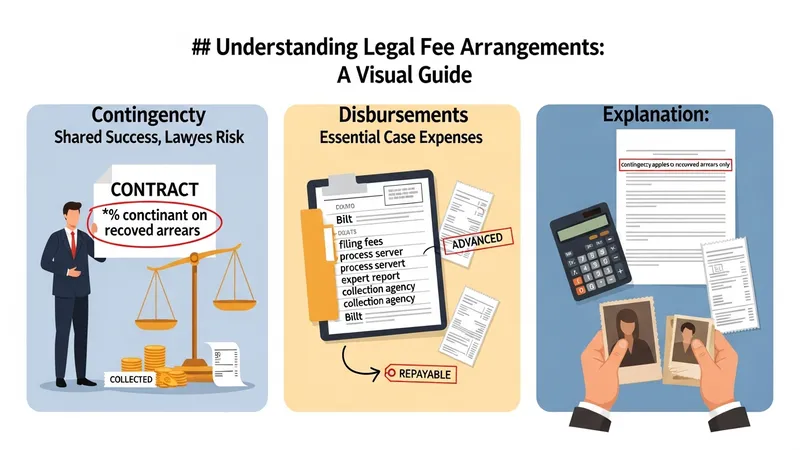
Practically, disbursements present a recurring issue. Filing fees, process server costs, expert reports, and collection agency charges can be significant and are often excluded from contingency calculations. Agreements may state that these amounts are advanced by the lawyer and recovered from a client’s portion of any award, or that the client must reimburse them irrespective of case outcome. Where a lawyer advances costs, the contract should explain whether the advance is repayable on success, on termination, or from the client’s share of proceeds.
Timeframes and milestone payments are another element to consider. A conditional fee might become due upon entry of a final order, on enforcement action that produces payment, or after a negotiated settlement. Some firms use staged triggers so that partial successes lead to proportionate fees; others require full resolution before any payment. Clients should expect the agreement to identify milestones clearly and to explain how partial recoveries are apportioned between lawyer fees and client receipts.
Regulatory and ethical considerations can affect structure availability. In some jurisdictions professional conduct rules restrict contingency arrangements in family law, or require that agreements be assessed for fairness before enforcement. Where regulator oversight exists, it can influence typical percentage ranges or require accounting for client funds and clear disclosure of the lawyer’s role in advancing costs. Understanding these structural variables may assist clients in comparing available arrangements without assuming universal applicability.